Views: 8
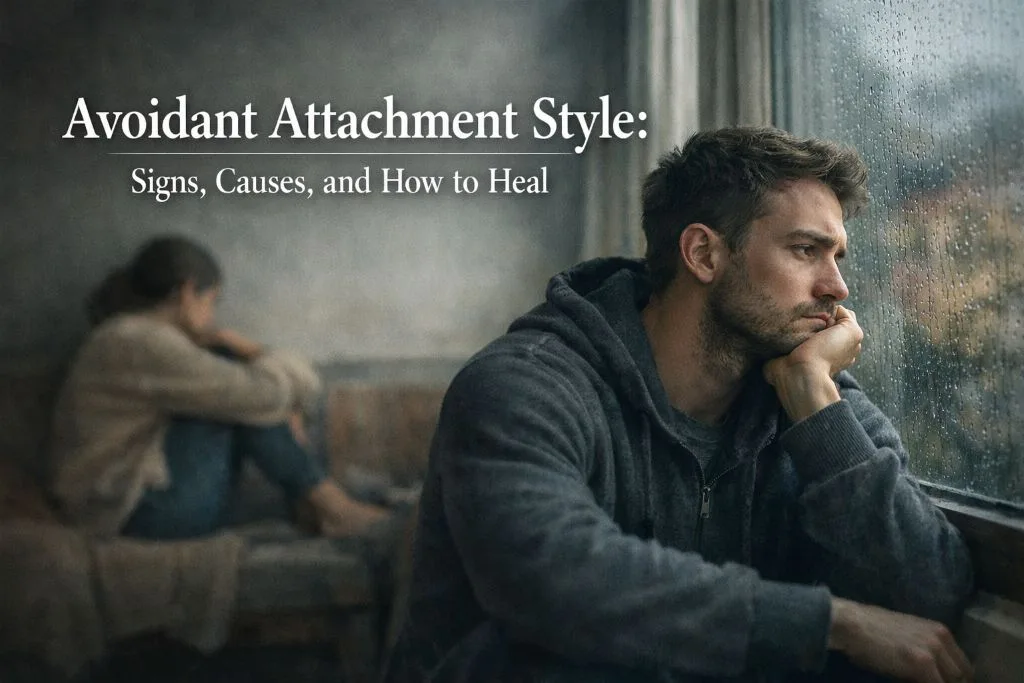
Learn the signs of avoidant attachment style, what causes it in childhood, and proven strategies to heal. Includes practical exercises, expert insights, and FAQs for people and partners.
Table of Contents
- Key Takeaways
- Introduction to Avoidant Attachment Style
- Quick Signs: Is This You or Someone You Love?
- What Is Avoidant Attachment Style?
- Signs of Avoidant Attachment Style
- Causes of Avoidant Attachment Style
- How to Heal Avoidant Attachment Style
- Avoidant Attachment and Parenting
- Conclusion
- Frequently Asked Questions (FAQs) on Avoidant Attachment Style
- Frequently Asked Questions About Avoidant Attachment Style
- What are the signs of avoidant attachment style?
- What causes avoidant attachment style in childhood?
- Can avoidant attachment style be healed?
- How does avoidant attachment affect romantic relationships?
- What is an anxious-avoidant relationship?
- What therapy works best for avoidant attachment style?
- Is avoidant attachment the same as being an introvert?
- Can avoidant attachment develop in adulthood?
- Why do avoidant people come back after pulling away?
- How can I communicate with a partner who has avoidant attachment?
- What does avoidant attachment look like in men and fathers?
- Frequently Asked Questions About Avoidant Attachment Style
- Conclusion on Avoidant Attachment style
- References
Key Takeaways
- Avoidant attachment style arises from emotionally unavailable caregiving and manifests as emotional distance, fear of intimacy, and hyper-independence.
- Healing requires self-awareness, therapy, and practicing vulnerability within safe relationships.
- With consistent effort, individuals can transition toward secure attachment, fostering healthier emotional bonds and resilience.
Introduction to Avoidant Attachment Style
Some people look like they have it all together. They are successful, self-sufficient, and rarely ask for help. But when a relationship starts to get close, something inside them quietly hits the brakes. They pull back. They get busy. They find reasons why “this isn’t the right time” or “I need space.”
If that sounds familiar, either in yourself or someone you love, you may be looking at avoidant attachment style.
As a father, I have learned that the way we show up in relationships often traces back to the way love was given to us as children. Avoidant attachment is not a personality flaw. It is a survival pattern. It develops when a child learns that emotional needs are unsafe, unwelcome, or ignored. The child grows up believing that independence is protection and that needing people is a weakness.
In this post, I will walk you through the signs of avoidant attachment style, what causes it, and practical steps toward healing. Whether you are trying to understand yourself, your partner, or your child, the goal is the same: moving toward secure attachment, where closeness feels safe instead of threatening.
READ ALSO: Attachment Styles Therapy: Healing Bonds, Building Secure Futures
Quick Signs: Is This You or Someone You Love?
Avoidant attachment often hides behind competence. Here are common patterns:
- Independence as armor.You pride yourself on not needing anyone, even when you are struggling.
- Closenenss feels like pressure.When someone wants more intimacy, you feel the urge to withdraw.
- Conflict means shutdown.During arguments, you go silent, leave the room, or emotionally check out.
- Vulnerability is uncomfortable.Sharing deep feelings feels exposing, risky, or pointless.
- Relationships stay surface-level.You may have many acquaintances but very few people who truly know you.
- Commitment triggers anxiety.Even when you care about someone, labels like “boyfriend,” “girlfriend,” or “partner” can make you feel trapped.
- You rationalize distance.You tell yourself you are “too busy,” “not the emotional type,” or “better off alone.”
If several of these resonate, avoidant attachment may be shaping your relationships. The good news is that patterns can change.
What Is Avoidant Attachment Style?
Avoidant attachment style is an insecure attachment pattern where emotional closeness feels threatening. People with this style often value independence highly and struggle to depend on others. They may appear confident, calm, and self-contained, but underneath there is often a deep fear of rejection, engulfment, or disappointment.
Psychologist John Bowlby, who developed attachment theory, and Mary Ainsworth, who identified attachment patterns through her “Strange Situation” research, found that children who received inconsistent or emotionally distant caregiving often learned to suppress their need for connection. As adults, this shows up as dismissive-avoidant attachment.
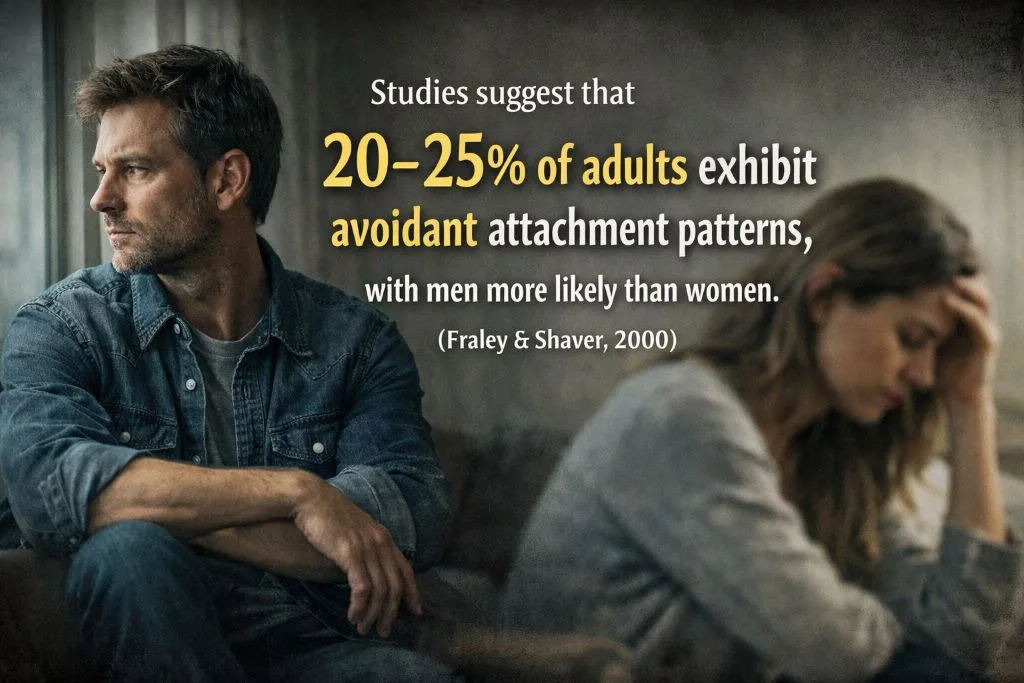
Research by Fraley and Shaver suggests that roughly 20–25% of adults show avoidant attachment patterns, with men slightly more likely than women to fall into this category. That does not mean avoidant attachment is permanent. It means the pattern is common, and it is workable.
Case Study: Anna
Anna is a 32-year-old professional. On the outside, she is capable and composed. In her relationship, however, she struggles. When her partner asks how she feels, she changes the subject. When conflict arises, she withdraws. In therapy, Anna realized that her parents rarely showed emotion. Crying was met with silence. Asking for help was seen as a burden. Over time, Anna learned that the safest way to be loved was to need very little.
Signs of Avoidant Attachment Style
Recognizing avoidant attachment is the first step toward healing.
Common Signs:
- Avoidance of closeness: Preferring surface-level interactions.
- Dismissive attitude: Downplaying the importance of relationships.
- Withdrawal during conflict: Choosing silence over engagement.
- Difficulty trusting others: Reluctance to depend on partners or friends.
- Emotional suppression: Struggling to identify or express feelings.
Expert Quote:
“Avoidant individuals often appear confident and independent, but beneath the surface lies a fear of vulnerability and rejection.” — Dr. Sue Johnson, Clinical Psychologist
Practical Exercise:
- Keep a relationship journal. Each time you feel the urge to withdraw, note the trigger, your emotions, and your response. Over time, patterns will emerge that highlight avoidant tendencies.
SEE ALSO: Anxious Attachment Style: Understanding, Healing, and Thriving in Relationships

Causes of Avoidant Attachment Style
Avoidant attachment usually begins in childhood. It is not caused by one bad day. It forms when a child repeatedly learns that emotional needs will not be met.
Children need more than food and shelter. They need emotional attunement. When a parent is physically present but emotionally absent, the child may stop reaching out. Over time, the child learns to self-soothe and suppress longing.
Dismissive Responses to Emotion
When a child hears messages like “stop crying,” “be a big boy,” or “don’t be so sensitive,” they learn that feelings are problems to be fixed, not signals to be heard. Boys are especially socialized this way, which is one reason avoidant attachment can be common among men and fathers.
Inconsistent or Conditional Care
Some children learn that love is available only when they are performing well, staying quiet, or not making demands. They become hyper-independent to avoid the pain of conditional acceptance.
Trauma, Neglect, or Loss
Abuse, neglect, parental absence, or early loss can reinforce the belief that closeness is dangerous. The avoidant pattern becomes a defense: if I do not need anyone, no one can hurt me.
Cultural and Gender Messages
Many cultures celebrate self-reliance, stoicism, and emotional control. Phrases like “man up” or “handle it yourself” may sound like strength, but they can train children to disconnect from their own emotional needs.
Avoidant Attachment vs. Avoidant Personality Disorder
It is important to distinguish between avoidant attachment style and avoidant personality disorder. Avoidant attachment is a relational pattern. Avoidant personality disorder is a clinical diagnosis involving severe social inhibition, feelings of inadequacy, and avoidance of most social interaction. If your symptoms are overwhelming or disabling, a mental health professional can help clarify what is going on.
Case Study: David
David grew up in a home where emotions were treated as weakness. His father believed that boys should not cry. His mother was overwhelmed and emotionally distant. As an adult, David built a successful career but struggled to maintain close relationships. Casual connections felt safe. Commitment felt like a trap. Understanding his attachment style helped him see that his distance was not freedom. It was protection.
How to Heal Avoidant Attachment Style
Healing avoidant attachment is not about becoming someone else. It is about learning that closeness can be safe. Here is a step-by-step path.
Step 1: Recognize the Pattern
You cannot change what you do not notice. Start by observing your reactions. When do you pull away? What triggers the urge to shut down? A simple journal can help.
Exercise: The Withdrawal Log
For two weeks, note the moments you feel like withdrawing from someone. Write down:
- The situation
- The emotion you felt
- The story you told yourself
- What you did
Patterns will emerge. You may notice that withdrawal often follows a request for closeness, a conflict, or a moment of vulnerability.
Step 2: Name the Fear
Avoidant behavior is usually driven by fear: fear of rejection, fear of being controlled, fear of disappointment, or fear of losing yourself in a relationship. Naming the fear makes it less automatic.
Exercise: The Fear Sentence
Complete this sentence: “If I let someone get close, I am afraid that…”
Write as many endings as you can. Do not edit. Awareness is the first step toward choice.
Step 3: Practice Small Vulnerability
Healing happens in small steps, not grand confessions. Start with low-risk vulnerability. Share a preference, a worry, or a memory with someone you trust.
Exercise: The Weekly Share
Each week, share one personal thought or feeling with a safe person. It does not have to be deep. It just has to be real. Track how your body responds before, during, and after.
Step 4: Work With a Therapist
A therapist trained in attachment work can help you process the root causes of your avoidant pattern. Effective approaches include:
- Attachment-based therapy
- Emotionally Focused Therapy (EFT)
- Cognitive Behavioral Therapy (CBT)
- EMDRfor processing childhood trauma
If you are unsure where to start, read my guide on Attachment Styles Therapy.
Step 5: Build Relationships That Reward Openness
Not every relationship will help you heal. Look for people who respond to your vulnerability with warmth, not judgment. A secure partner or friend can become a “corrective emotional experience,” showing you that closeness does not have to lead to hurt.
Case Study: Sarah
Sarah had always kept partners at arm’s length. Her current partner noticed the pattern and responded gently. Instead of chasing her when she withdrew, he said, “I care about you. I am here when you are ready to talk.” That safety allowed Sarah to slowly open up. Over time, she learned that vulnerability did not lead to rejection. It led to connection.
Step 6: Reparent Yourself
Reparenting means giving yourself the emotional care you did not receive as a child. It means validating your feelings, setting healthy boundaries, and speaking to yourself with kindness.
Exercise: Letter to Your Younger Self
Write a letter to yourself at the age when you first learned to hide your needs. Tell that child what they needed to hear. Read the letter aloud once a week. This practice builds self-compassion and rewires the inner voice that says needs are shameful.
Affirmation to practice:
“My emotions are valid. Needing people is human. Closeness can be safe.”
SEE ALSO: Engulfment Trauma: Understanding Enmeshment, Fear, and Recovery Strategies | Complete Guide 2025
Avoidant Attachment and Parenting
Avoidant attachment does not only affect romantic relationships. It also shapes parenting. A father with avoidant tendencies may be physically present but emotionally distant. He may struggle to comfort a crying child, talk about feelings, or admit when he is wrong.
The risk is that children absorb what we model. If a father never shows vulnerability, his children may learn that emotions are not safe to express.
Healing your attachment style is one of the most powerful things you can do for your children. A securely attached father teaches his children that it is safe to need people, safe to feel deeply, and safe to come back after conflict.
For practical ways to build closeness, see How to Build Confidence in Children and Healthy Father-Son Relationship.
Conclusion
Avoidant attachment style is not a life sentence. With awareness, therapy, and consistent practice, individuals can move toward secure attachment, fostering deeper and healthier relationships. Healing requires patience, but the rewards—emotional intimacy, trust, and resilience—are transformative.

Frequently Asked Questions (FAQs) on Avoidant Attachment Style
Frequently Asked Questions About Avoidant Attachment Style
What are the signs of avoidant attachment style?
Avoidant attachment style shows up as emotional distance, discomfort with intimacy, and a strong preference for independence. Common signs include withdrawing during conflict, difficulty expressing feelings, downplaying the importance of relationships, and feeling trapped when a partner wants more closeness.
What causes avoidant attachment style in childhood?
It usually develops when caregivers are emotionally unavailable, dismissive, or inconsistent. Children learn to suppress their needs to avoid rejection. Strict parenting, childhood trauma, neglect, and cultural messages that discourage emotional expression can all contribute.
Can avoidant attachment style be healed?
Yes. With self-awareness, therapy, and practice in safe relationships, avoidant attachment can shift toward secure attachment. Healing is gradual, but it is possible.
How does avoidant attachment affect romantic relationships?
It often creates a push-pull dynamic. The avoidant partner may pull away when things get close, leaving the other partner feeling rejected or confused. Over time, this can lead to distance, resentment, or breakups unless both partners understand the pattern.
What is an anxious-avoidant relationship?
An anxious-avoidant relationship happens when one partner craves closeness and the other fears it. The anxious partner pursues, the avoidant partner withdraws, and the cycle intensifies. Breaking this pattern requires both partners to recognize their roles and communicate differently. You can learn more in my post on Anxious Attachment Style.
What therapy works best for avoidant attachment style?
Attachment-based therapy, Emotionally Focused Therapy (EFT), and Cognitive Behavioral Therapy (CBT) are all effective. EMDR can help if there is underlying trauma. The key is finding a therapist who understands attachment patterns and creates a safe, non-judgmental space.
Is avoidant attachment the same as being an introvert?
No. Introversion is about how someone recharges energy. Avoidant attachment is about how someone relates to emotional closeness. An extrovert can have avoidant attachment, and an introvert can have secure attachment.
Can avoidant attachment develop in adulthood?
Yes. While it usually begins in childhood, significant adult experiences such as betrayal, loss, or abusive relationships can reinforce or deepen avoidant patterns.
Why do avoidant people come back after pulling away?
Avoidant people often miss connection after they create distance. They pull away to protect themselves, then feel lonely or regretful. This can create a cycle of leaving and returning unless the underlying fear is addressed.
How can I communicate with a partner who has avoidant attachment?
Give them space without abandoning them. Avoid chasing or criticizing. Use calm, direct language. Let them know you care and that you are available when they are ready. Over time, consistent safety can help them open up.
What does avoidant attachment look like in men and fathers?
In men, avoidant attachment often shows up as stoicism, reluctance to ask for help, and difficulty talking about emotions. In fathers, it can appear as physical presence without emotional engagement. This is often reinforced by cultural messages that equate masculinity with self-reliance.
Conclusion on Avoidant Attachment style
Avoidant attachment style is not a life sentence. It is a pattern learned early in life, often as a way to survive emotionally unavailable caregiving. The same independence that once protected you may now be keeping you from the closeness you actually want.
Healing does not mean becoming dependent or losing yourself. It means learning that you can need people and still be safe. It means discovering that vulnerability, when shared with the right person, leads to connection instead of rejection.
If you recognized yourself in this post, start small. Pick one exercise. Have one honest conversation. Notice one moment when you want to withdraw and choose to stay a little longer.
And if you are parenting while healing, remember this: every time you model emotional presence, you are giving your child a different blueprint for love.
Your next step: Download the free Avoidant Attachment Reflection Worksheet and begin tracking your patterns this week. Or read my guide on Attachment Styles Therapy to explore professional support options.
References
- Fraley, R. C., & Shaver, P. R. (2000). Adult romantic attachment: Theoretical developments, emerging controversies, and unanswered questions. Review of General Psychology.
- Johnson, S. (2008). Hold Me Tight: Seven Conversations for a Lifetime of Love. Little, Brown Spark.
- WebMD – Avoidant Attachment: Definition, Signs, Causes & Treatment https://www.webmd.com
- Therapist.com – Avoidant Attachment: Signs, Causes, and How to Heal https://therapist.com
- Crystal G. Lynch – Understanding and Navigating Avoidant Attachment in Relationships https://medium.com
- Bowlby, J. (1988). A Secure Base: Parent-Child Attachment and Healthy Human Development.Basic Books.
- Ainsworth, M. D. S., Blehar, M. C., Waters, E., & Wall, S. (1978). Patterns of Attachment: A Psychological Study of the Strange Situation. Lawrence Erlbaum.
- Fraley, R. C., & Shaver, P. R. (2000). Adult romantic attachment: Theoretical developments, emerging controversies, and unanswered questions.Review of General Psychology.
- Johnson, S. (2008). Hold Me Tight: Seven Conversations for a Lifetime of Love.Little, Brown Spark.
- Levine, A., & Heller, R. (2010). Attached: The New Science of Adult Attachment and How It Can Help You Find—and Keep—Love.