Views: 2
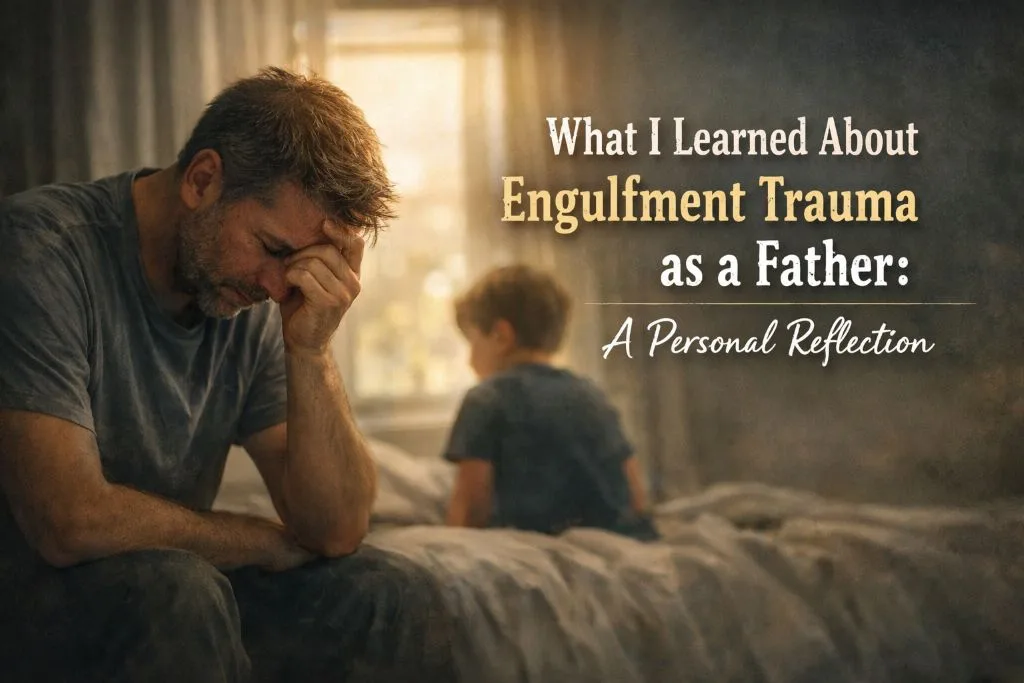
I unpack what I learned about engulfment trauma as a father really means, how it shows up in parenting, and what I’ve learned about raising children who feel free to be themselves. Expert insights, personal reflection, and practical takeaways.
Table of Contents
- Introduction to What I Learned About Engulfment Trauma as a Father: A Personal Reflection
- What Is Engulfment Trauma?
- Where Engulfment Trauma Comes From
- How I First Recognized It in Myself
- What the Experts Say: Curated Quotes and Insights
- How Engulfment Trauma Shows Up in Fatherhood
- What I Changed — and What I Am Still Learning
- Why This Matters for Fathers Specifically
- FAQs About Engulfment Trauma and Fatherhood
- Related Posts
- Expert References and Sources
- Final Thought
Introduction to What I Learned About Engulfment Trauma as a Father: A Personal Reflection
A few years ago, I came across the term engulfment trauma while reading about enmeshed families. At first, I filed it away as another psychology buzzword. Then I started noticing it in my own home.
Not in dramatic ways. There were no screaming matches, no obvious control battles. But there were small moments that stayed with me. My son hesitating before choosing a snack because he wanted to know what I wanted. My daughter explaining her feelings and then immediately looking at my face to see if she had said the right thing. The way “I love you” sometimes felt like it came with an invisible contract: love me back, agree with me, stay close.
That is when I realized engulfment trauma is not just something that happens to children. It is something parents can accidentally pass on — even when we mean well. Especially when we mean well.
This post is my attempt to make sense of what I have learned. It is not a clinical diagnosis, and it is not a parenting manual. It is one father’s reflection, supported by research and expert voices, on what it means to love your children without swallowing them whole.
What Is Engulfment Trauma?
Engulfment trauma happens when a child’s sense of self is overwhelmed by a parent’s emotional needs, expectations, or identity. The child is not physically harmed. They are not necessarily neglected. But their emotional boundaries are repeatedly crossed until they stop knowing where they end and the parent begins.
Dr. Pete Walker, therapist and author of Complex PTSD: From Surviving to Thriving, describes this dynamic in the context of emotional abuse and enmeshment. He writes that children in engulfing environments often learn to suppress their own needs, preferences, and emotions to maintain connection with a parent. Over time, this creates what he calls a “fawn” response — a survival pattern of people-pleasing and self-abandonment.
In simpler terms: the child becomes so good at reading the parent that they forget how to read themselves.
This is different from healthy closeness. A close parent-child relationship has warmth, affection, and connection. An engulfing relationship has fusion, anxiety, and a quiet pressure to conform.

Where Engulfment Trauma Comes From
Engulfment trauma usually grows out of a parent’s own unmet needs. A mother or father who felt unseen, abandoned, or emotionally unsafe as a child may unconsciously turn to their own child for the validation they never received.
Dr. Murray Bowen’s family systems theory calls this emotional fusion — a blurring of boundaries between family members. Dr. Salvador Minuchin, developer of structural family therapy, described the same pattern as enmeshment. Both point to the same truth: when a parent cannot tolerate emotional separation from a child, the child pays the cost.
As fathers, we are not immune. In fact, we may be especially vulnerable to missing the signs because fatherhood is still often framed as either distant discipline or heroic sacrifice. We are praised for being “involved,” but rarely asked whether our involvement leaves room for our children to become themselves.
How I First Recognized It in Myself
I have always wanted to be a present father. I read to my children, helped with homework, attended school events, and tried to be the kind of dad I wished I had more of. But presence and enmeshment are not the same thing, and I had to learn that the hard way.
Here are three moments that changed how I see myself as a father.
1. The “We” Problem
I noticed how often I said “we” when talking about my children. “We are applying to that school.” “We are thinking about soccer.” “We don’t really like that kind of music.”
There was no “we.” It was my child’s life, not mine. My language revealed how much of their identity I had absorbed into my own.
2. The Silence After Disagreement
One evening, my teenage son disagreed with me about something small — a movie choice, I think. I did not yell. I did not punish him. But I went quiet. Not reflective quiet. Disappointed quiet. The kind of silence that says, “You have hurt me by being different from me.”
He noticed. He apologized. We watched the movie I wanted. And I sat there feeling like a good father because my child had “respected” me. Only later did I realize I had taught him that my comfort mattered more than his honesty.
3. The Achievement Mirror
When my children succeeded, I felt proud. That is normal. But when they struggled, I felt exposed. Their failures landed in my chest like my own. Their wins felt like proof that I was doing a good job.
That is not pride in them. That is using them as a mirror.
What the Experts Say: Curated Quotes and Insights
I am a writer and researcher, not a therapist. So when I write about something as serious as trauma, I turn to people who have spent their careers studying it. Here are the voices that have shaped my understanding.
On boundaries and the self
“Differentiation is the ability to remain connected to others while preserving a clear sense of self.” — Dr. Murray Bowen, psychiatrist and family systems pioneer
This is the goal. Not distance. Not coldness. Connection with boundaries.
On trauma and the body
“Trauma is not what happens to you. Trauma is what happens inside you as a result of what happens to you.” — Dr. Gabor Maté, physician and author of The Myth of Normal
Engulfment trauma may not leave visible scars, but it shapes the nervous system. Children in enmeshed families often grow into adults who feel anxious, guilty, or empty when they try to assert themselves.
On attachment and repair
“The need for connection and the need for autonomy are not opposing forces. They are the twin requirements of healthy human development.” — Dr. Sue Johnson, clinical psychologist and developer of Emotionally Focused Therapy
This reframed everything for me. I used to think that good fatherhood meant protecting closeness at all costs. Now I understand that my children need both connection and separation from me. My job is to make both feel safe.
On emotional neglect and the invisible wound
“Emotional neglect is the silent killer of a child’s spirit. It is not what happened; it is what failed to happen.” — Dr. Jonice Webb, psychologist and author of Running on Empty
Engulfment can look like the opposite of neglect — lots of attention, lots of involvement. But if that attention does not make room for the child’s own inner world, it becomes a different kind of absence.
On the father wound
“The father wound is so pervasive because it is so rarely named. It lives in the space between what a son needed and what he received.” — Dr. Richard Rohr, Franciscan priest and author
I include this because fathers matter more than we often admit. Our wounds shape our children. But our awareness can also shape our healing.
On healing through awareness
“When we deny our stories, they define us. When we own our stories, we get to write a brave new ending.” — Dr. Brené Brown, research professor and author
This is why I write posts like this one. Not because I have it figured out, but because naming the pattern is the first step toward changing it.
How Engulfment Trauma Shows Up in Fatherhood
Fathers can contribute to engulfment trauma in ways that are easy to miss because they often look like love, protection, or high standards. Here are some patterns I have learned to watch for.
| What It Can Look Like | What It Actually Is |
| Wanting to know everything about your child’s day | Anxiety about not being emotionally connected |
| Feeling hurt when your child prefers a friend’s opinion | Making your child responsible for your self-esteem |
| Pushing your child toward activities you once wanted | Living through your child instead of letting them choose |
| Getting quiet, cold, or disappointed after disagreement | Using emotional withdrawal to control behavior |
| Saying “we” when you mean “my child” | Difficulty seeing your child as a separate person |
| Praising obedience more than honesty | Rewarding self-abandonment over authenticity |
None of these make you a bad father. They make you a human one. The danger is not in having these impulses. The danger is in never questioning them.

What I Changed — and What I Am Still Learning
I want to be honest: I have not “fixed” this. Parenting is not a problem you solve. It is a relationship you keep tending. But here are five shifts that have helped me become a safer father for my children.
1. I stopped treating my children like extensions of me
Their preferences, friendships, failures, and successes belong to them. I can guide, support, and celebrate. I cannot own.
2. I learned to tolerate their disappointment in me
This was harder than I expected. When my children are upset with me, my first instinct is to explain, defend, or fix. Sometimes the most loving thing I can do is simply hear them and let them have their feelings without making it about me.
3. I started naming boundaries out loud
I say things like: “That’s your decision to make.” “I’m not going to ask you about that again.” “You can love me and disagree with me.” These small sentences teach my children that closeness does not require conformity.
4. I got honest about my own story
Some of my parenting patterns came from my own childhood. Some came from fear. Some came from good intentions that grew too large. I have found that the more I understand my own emotional history, the less I dump it onto my children.
5. I invited my wife into the conversation
My partner sees things I do not. She has gently pointed out moments where I was too invested, too reactive, or too present in a way that crowded our children. That feedback is a gift, not an attack.

Why This Matters for Fathers Specifically
There is a particular pressure on fathers today. We are told to be more involved than previous generations, more emotionally available, more present. That is good. But there is a shadow side: involvement can become engulfment when it is driven by our own need to matter.
A father who needs his children to need him will raise children who do not know how to need themselves.
The antidote is not to pull back and become distant. It is to become a father whose love is large enough to include difference. Whose presence is steady enough to allow separation. Whose identity is strong enough that his children do not have to carry it.
FAQs About Engulfment Trauma and Fatherhood
What is engulfment trauma in simple terms?
Engulfment trauma happens when a parent’s emotional needs, identity, or expectations overwhelm a child’s developing sense of self. The child learns to prioritize the parent’s comfort over their own authenticity.
Is engulfment trauma the same as enmeshment?
They are closely related. Enmeshment describes the family structure — blurred boundaries and fused identities. Engulfment trauma describes the psychological wound that can result from growing up in that structure.
Can fathers cause engulfment trauma, or is it mostly mothers?
Any parent can contribute to engulfment trauma. Mothers are more often discussed in this context, but fathers can be equally engulfing through over-involvement, emotional withdrawal as punishment, living through a child’s achievements, or making a child responsible for the father’s happiness.
How do I know if I am an engulfing father?
Signs include: difficulty letting your child have separate opinions, feeling personally hurt by their independence, using silence or disappointment to influence behavior, saying “we” when you mean “they,” and feeling anxious when your child is not emotionally close to you.
What is the difference between being a present father and an engulfing father?
Presence is responsive to the child’s needs. Engulfment is driven by the parent’s needs. A present father supports his child’s autonomy. An engulfing father depends on his child’s compliance or closeness for his own emotional stability.
Can engulfment trauma be healed?
Yes, but it usually takes time and often professional support. Healing involves recognizing the pattern, setting healthy boundaries, processing the underlying emotions, and learning new ways of relating. Both the parent and the adult child can do this work.
How can I avoid passing engulfment trauma to my children?
Start by becoming aware of your own emotional needs and where they come from. Practice letting your child have separate feelings, opinions, and friendships. Apologize when you cross a boundary. Seek therapy if you notice repeating patterns you cannot change on your own.
What should I do if I recognize engulfment trauma in my own family?
Begin with education and self-reflection. Then consider individual or family therapy with a licensed professional who understands family systems, attachment, and trauma. Change is possible, but it works best with support.
Related Posts
- Engulfment Trauma: Understanding Enmeshment, Fear, and Recovery Strategies
- 150+ Powerful Engulfment Trauma Quotes for Healing and Recovery
- Understanding the Enmeshed Family: Signs, Impact, and Healing
- Mother-Son Enmeshment: Warning Signs, Effects & How to Set Boundaries
- Avoidant Attachment Style: Signs, Causes, and How to Heal
- Healthy Father-Son Relationship: Building Bonds That Last
- Family Therapy Ideas: Activities, Case Studies, and Resources
- Ultimate Guide to Family Therapy Resources
Expert References and Sources
- Bowen, M. (1978). Family Therapy in Clinical Practice. Jason Aronson.
- Johnson, S. M. (2019). Attachment in Psychotherapy. Guilford Press.
- Maté, G. (2022). The Myth of Normal: Trauma, Illness, and Healing in a Toxic Culture. Avery.
- Minuchin, S. (1974). Families and Family Therapy. Harvard University Press.
- Rohr, R. (2011). Falling Upward: A Spirituality for the Two Halves of Life. Jossey-Bass.
- Walker, P. (2013). Complex PTSD: From Surviving to Thriving. Azure Coyote.
- Webb, J. (2012). Running on Empty: Overcome Your Childhood Emotional Neglect. Morgan James Publishing.
- Brown, B. (2015). Rising Strong: How the Ability to Reset Transforms the Way We Live, Love, Parent, and Lead. Random House.
- Siegel, D. J. (2012). The Developing Mind: How Relationships and the Brain Interact to Shape Who We Are. Guilford Press.
- van der Kolk, B. (2014). The Body Keeps the Score: Brain, Mind, and Body in the Healing of Trauma. Viking.
Final Thought
Fatherhood has taught me that love is not measured by how close my children stay to me. It is measured by how free they feel to leave — and how welcome they know they are when they return.
Engulfment trauma taught me the opposite lesson for a long time: that love means holding on, staying fused, and making sure no one drifts too far. I am unlearning that now. Slowly. Imperfectly. But deliberately.
If you are a father reading this and something in it feels familiar, I hope you will not use it as a reason to shame yourself. Use it as a reason to pay closer attention. Our children do not need perfect fathers. They need fathers who are willing to grow — and who give them permission to grow too.
Disclaimer: This post reflects personal experience and curated research. It is not a substitute for professional mental health advice, diagnosis, or treatment. If you or your family are struggling with trauma, enmeshment, or relationship difficulties, please consult a licensed mental health professional.